
The Wanderer's Changing Fortunes
I ChingThis flow follows the stranger's rise and decline as security depends on humility, careful conduct, and control of temper.
increasing Bearing strength in each event
 decreasing
Bearing strength in each eventdecreasingA Stranger Arrives Poorly
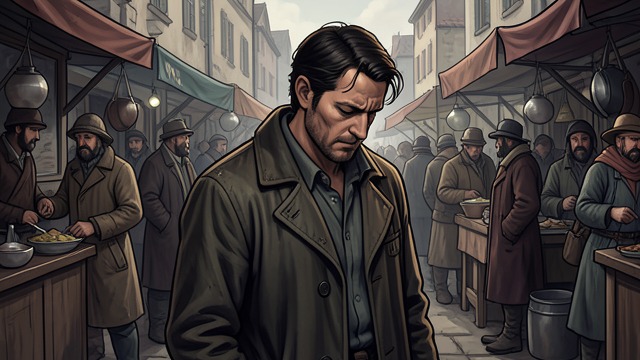
A Vulnerable Arrival
Low status abroad
The first line shows a stranger in a mean condition and occupied with mean tasks. Legge says this conduct brings further calamity.
Away from home, the traveler lacks the protection and standing that normally support his actions.
Humility as necessity
The figure makes clear that a stranger cannot behave as though the surrounding community owes him deference. His first failure is to ignore the limits of his position.
The journey begins with exposure, not freedom.
A Safe Lodging Is Found
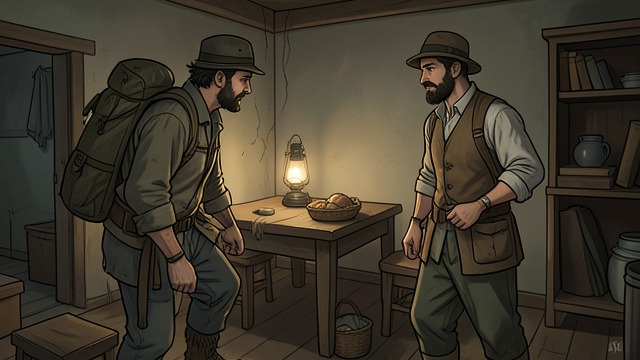
Security Through Preparation
A traveler with provisions
The second line depicts a stranger in a lodging place with the means of livelihood and trustworthy servants. Legge reads the position as modestly secure.
The traveler has arranged the practical supports needed to continue.
Trust sustains movement
The line's balance differs from wealth or social rank. Its security comes from sound preparation and reliable companions.
The journey advances because the traveler respects its material demands.
Violence Destroys Hospitality
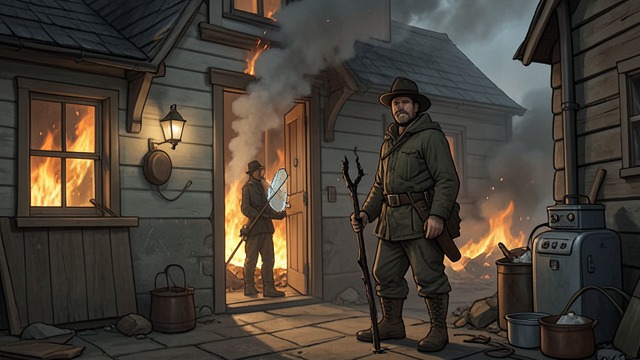
A Lodging House Burns
A destructive traveler
The third line portrays a stranger who burns his lodging and loses his servants. Legge attributes the disaster to violent conduct inconsistent with the humility required abroad.
A temporary shelter can be destroyed by the person it was meant to protect.
Safety becomes precarious
Even a claim to firm correctness cannot undo the harm. Without a host, servants, or stable place, the traveler faces escalating danger.
The episode turns a moral failure into a practical crisis.
A Lost Arrow Leads to Recognition
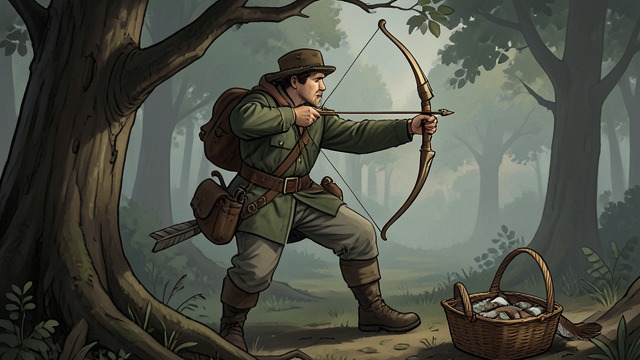
The Traveler's Skill Is Seen
A costly success
The fifth line shows a traveler shooting a pheasant and losing his arrow. The loss accompanies an outcome that brings praise and a responsible charge.
Legge explains that an accomplished traveler could present a pheasant as a gift when entering a ruler's service.
Advancement through conduct
The stranger gains recognition not by demanding a place but by showing ability and earning trust. His status shifts from outsider toward valued officer.
The moment offers a qualified success within an unstable journey.
Arrogance Ends the Journey
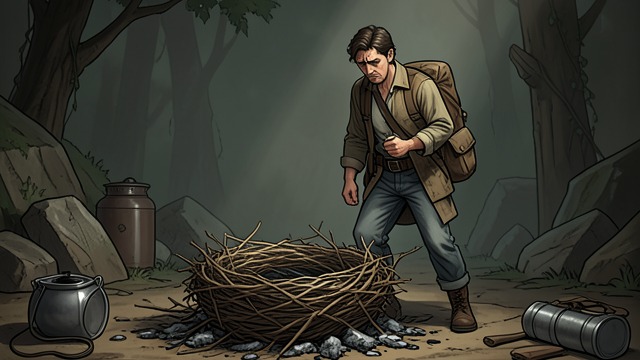
A Nest in Flames
Success becomes pride
The final line portrays a bird whose nest burns. The traveler first laughs and then cries, having discarded the docility needed for his situation.
Legge judges the conduct arrogant and violent, the opposite of a stranger's proper stance.
Reversal without repair
The traveler has reached a position where further advance is dangerous. His failure comes not from being foreign but from forgetting the humility that kept him safe.
The narrative closes by making self-command the condition of remaining welcome.
At the first line of The Wanderer
At the second line of The Wanderer
At the third line of The Wanderer
At the fifth line of The Wanderer
At the topmost line of The Wanderer
